

Clinical Quality Registries
The machine that drives incredible patient outcomes
Three months post-op, on average, 91% of patients undergoing lumbar surgery and 90% of patients undergoing cervical surgery at Goodman Campbell are satisfied with their surgery and would undergo the same operation for the same results.
Quantitative & Qualitative Impact
Dedicated to serving patients. Wholly funded by the Neurosurgery Foundation at Goodman Campbell, quality registries at Goodman Campbell are continually updated records of patient outcomes at our practice and beyond. Through your support, our physicians and researchers can collect and access this information to serve individual patients as well as the entire field of neurosurgery. With a 14-member team dedicated to these initiatives, Goodman Campbell is leading the way to advance the highest-quality patient care.
Bringing research to the bedside. Patients frequently ask, “What are the chances this surgery will make me better?” Quality registry data makes it possible for Goodman Campbell physicians to answer this question with a high level of accuracy. Goodman Campbell looks at systematically tracked outcomes to understand what’s driving success and how they can refine approaches in real time.
“Being the light” for patients. Following up with patients is more than data collection. The one-on-one communication also gives patients a chance to share their stories and connect with a person who truly cares about their welfare. As Quality Manager Rachel Sheets reminds callers who reach out to Goodman Campbell patients, “You might be the only person that patient talks to on that day, so be the light.”

Connection & Caring
After surviving a stroke, David looked forward to follow-up calls from Goodman Campbell. “Pepper was such a positive person when checking on me. She made me feel like she’d known me for years and she genuinely cared about me and my recovery. She was a pleasure to work with.”
David Duncan, Neurosurgery Foundation Supporter
Stroke and Aneurysm Quality Registry
Neurovascular NVQI-QOD
The NeuroVascular Quality Initiative-Quality Outcomes Database (NVQI-QOD) is regarded by the medical community as the premier neurovascular registry. Our participation empowers us to measure our incidence of technical efficacy, clinical outcomes, safety and complications, length of stay, and other critical metrics in comparison with national benchmarks for quality assurance and improvement.
Goodman Campbell participates in NVQI-QOD’s ischemic stroke, cerebral aneurysm, and neural embolization modules. Every patient being treated for stroke via thrombectomy in the interventional radiology suite or operating room, for aneurysm treatment, or treatment via embolization goes into these registries so that we can follow up with them, report findings, and continually provide exceptional care.
Measuring patient outcomes has also led to a number of high-impact papers in the literature and insights that connect directly to patient care. “We demonstrated that time, not number of passes in a stroke thrombectomy, impacts outcome. This was actually quite controversial,” says Daniel Sahlein, MD, an interventional neuroradiologist at Goodman Campbell. “We then showed that each minute of time that elapses during a thrombectomy changes the likelihood of the patient’s discharge disposition, between home, rehabilitation facility, long-term care facility, or hospice.”
Registry data has brought to light the difference in outcome between left- and right-sided occlusions who receive thrombectomy, which recently led to coverage in NeuroNews. The registry also enabled a recently submitted paper on ruptured flow diversion that should offer a unique look at antiplatelet management during these challenging procedures.
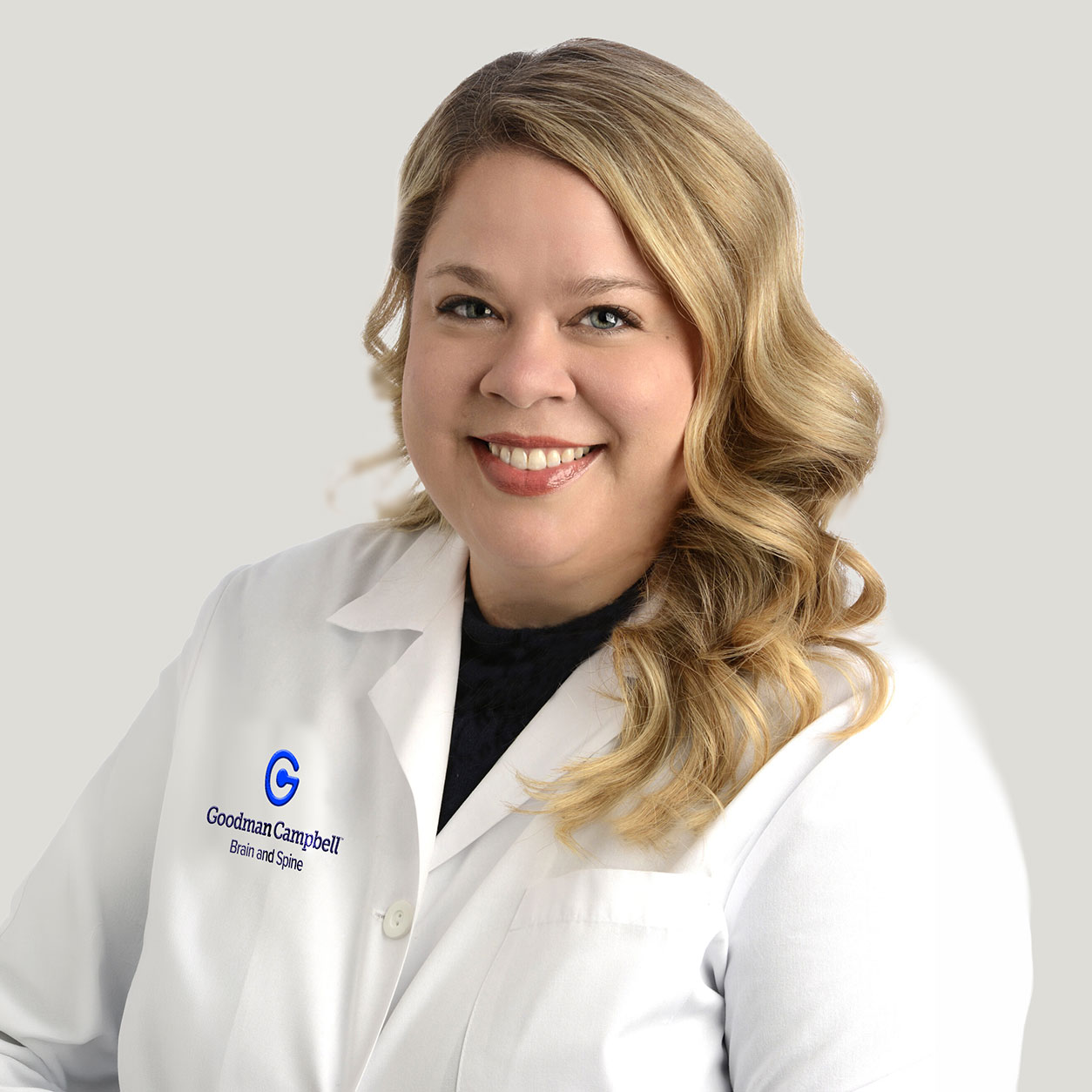
‘How are you feeling?’
“We hire some of the nicest people in the world to follow up with spine patients. Over time, we can see if surgery decreased pain, increased quality of life, and decreased disability — and overwhelmingly the answer is ‘Yes.’”
Rachel Sheets, Quality Manager, Clinical Practice and Patient Outcomes
Spine Quality Registry
Goodman Campbell
The Goodman Campbell Spine Quality Registry tracks a majority of spine patients who had elective surgery for two years after their procedure. Our commitment to these patients began in 2012 as part of a national registry. When that initiative dissolved in 2019, we brought the project in house to continue building on the valuable work being accomplished.
Our spine registry includes thousands of patients, with close to 500 being contacted every month to collect patient-reported outcomes measures (PROMs) prior to surgery, and then at 3-months, 1-year, and 2-years post surgery. We inquire about pain and how it might be impacting their ability to sleep, dress themselves, carry out household tasks, or return to the hobbies and activities they love.
One of the most remarkable things about the project is its high participation rate. While the general consensus for registries is that a 60% follow-up rate is considered an acceptable minimum to keep the risk of bias in results at an acceptable level, Goodman Campbell’s rates for both cervical and lumbar surgeries consistently average in the 90th percentile at the three-month mark and in the 70th percentile at 24 months post surgery.
Dedicating resources from the Neurosurgery Foundation to collect this information empowers Goodman Campbell to know with more certainty how well our patients are doing. If a patient isn’t improving like they would like to be or has developed a new symptom, we know about it. In most specialty practices, once a patient is released from care, it’s up to them to get back to the doctor, whereas with our quality program’s proactive communication, we can triage that patient back into the practice if needed. The spine registry helps ensure that our patient-centered care doesn’t end once a person returns home.
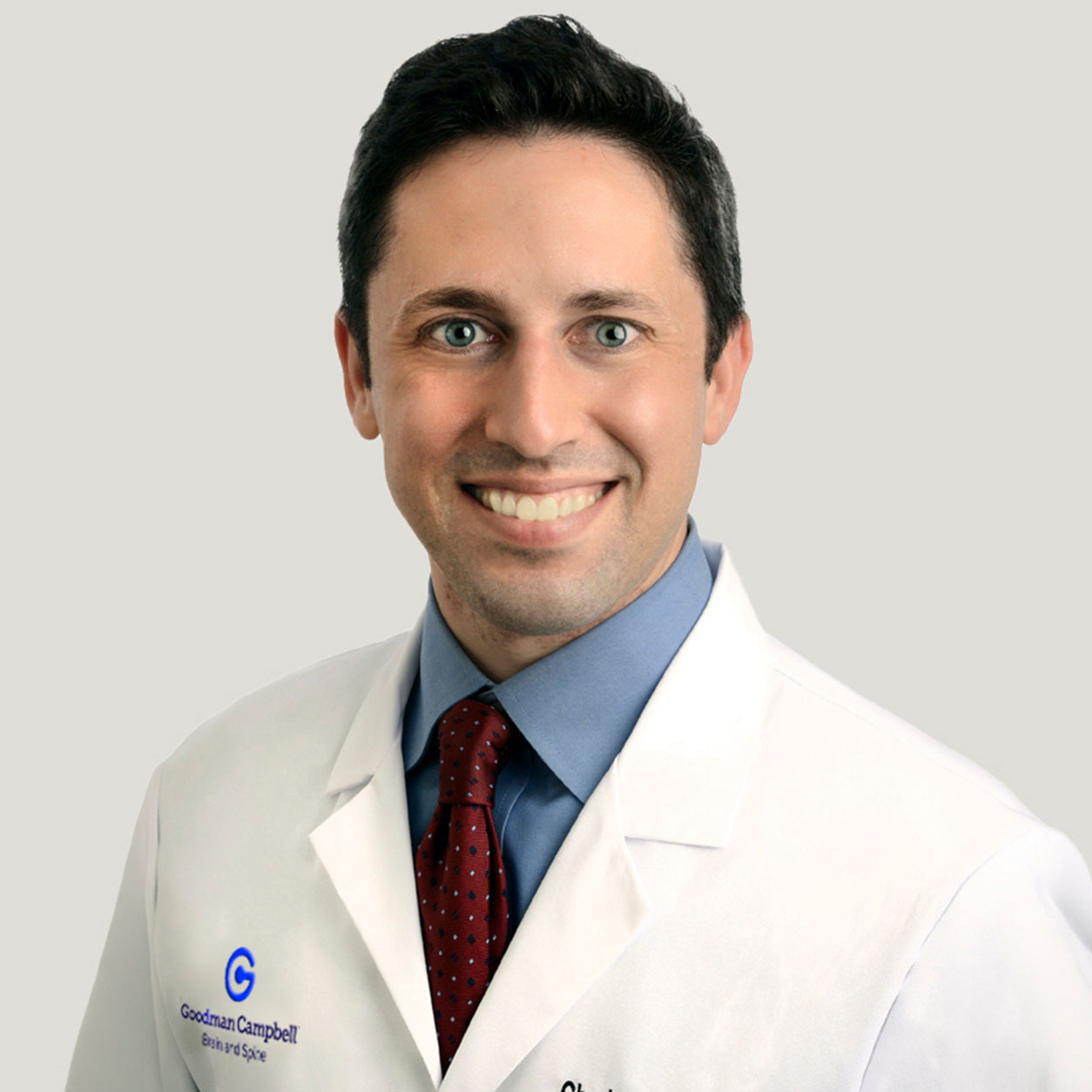
Pushing boundaries of care
“The brain tumor registry at Goodman Campbell is a powerful engine for advancing patient care and saving lives. Philanthropic support ensures this vital work continues, enabling us to push the boundaries of care and deliver better outcomes for every patient we serve.”
Charles Kulwin, MD
Neurosurgeon, Cranial and Spine Specialist
Brain Tumor Quality Registry
QOD Tumor Registry
Goodman Campbell launched its brain tumor quality registry in 2021 to include all patients who undergo an intracranial tumor resection. Associated with the national QOD Tumor Registry (led by NeuroPoint Alliance and supported by the University of Chicago), this project includes patients who have lived with a tumor for a period of time and have a scheduled surgery as well as emergency, unplanned surgeries to remove a brain tumor.
“As a national leader, our registry captures the outcomes of thousands of brain tumor surgeries and compares them with leading practices across the country, giving our neurosurgeons unparalleled insight into what works best and where we can improve,” says Charles Kulwin, MD, neurosurgeon, and cranial and spine specialist at Goodman Campbell. “This data-driven approach not only validates the excellence of our current techniques but also fuels innovation, helping us refine safer, more effective treatments for the future.” The registry recently helped confirm the impact of tumor fluorescence in maximizing tumor removal while protecting healthy brain tissue.
We follow patients for five years, beginning at a pre-surgery baseline whenever possible. Following the tumor resection, we reach out at three months, 12 months, two years, and five years. A lot of these tumors are also being treated by oncology, and five-year mortality is a major indicator of success.
With each conversation, Phyllis Cowherd, Goodman Campbell Data Entry Clerk II, listens as though that patient’s story is the only thing that matters. “Communicating with our brain tumor patients is very important to me. I love working with these patients in every way. They truly make my life richer,” she says.
As we’re leveraging the registry data to make our patient experience and care the best it can be, we’re also using the data to support Ascension St. Vincent Indianapolis Brain Tumor Center’s speciality certification through the Joint Commission Gold Seal of Approval. This recognition honors the program for rigorous standards of quality and safety that only five centers in the country have achieved.
1 of 5
Under the care of Goodman Campbell physicians, the Ascension St. Vincent Indianapolis Brain Tumor Center is one of only five U.S. centers to receive the Joint Commission Gold Seal of Approval for Brain Tumor Certification.
Pain Management Quality Registry
Goodman Campbell
Born from our physicians’ meaningful research questions and desire to standardize quality measurement, the Goodman Campbell Pain Management Quality Registry was launched in 2024. The registry includes two modules, one for patients using a spinal cord stimulator and a second for those who have undergone a basivertebral nerve (BVN) ablation. These Goodman Campbell programs establish a national standard for measuring and improving interventional pain management clinical care and quality.
- For the spinal cord stimulator module, patients are tracked from their trial through their permanent implants. Once the permanent implant is in place, we follow patients for two years, reaching out to learn how well the spinal cord stimulator is reducing their pain and increasing their quality of life (PROMS).
- Patients included in the BVN module follow a similar cadence for follow-ups, with PROMS data collected regularly to gauge how successful the procedure has been at treating their condition.
As we continue to build the pain management registry, more meaningful insights will emerge.